Heavy Metal Testing in Water: What You Need to Know for Compliance in Alberta
2026-04-27

Phone No.
(780) 450-3957
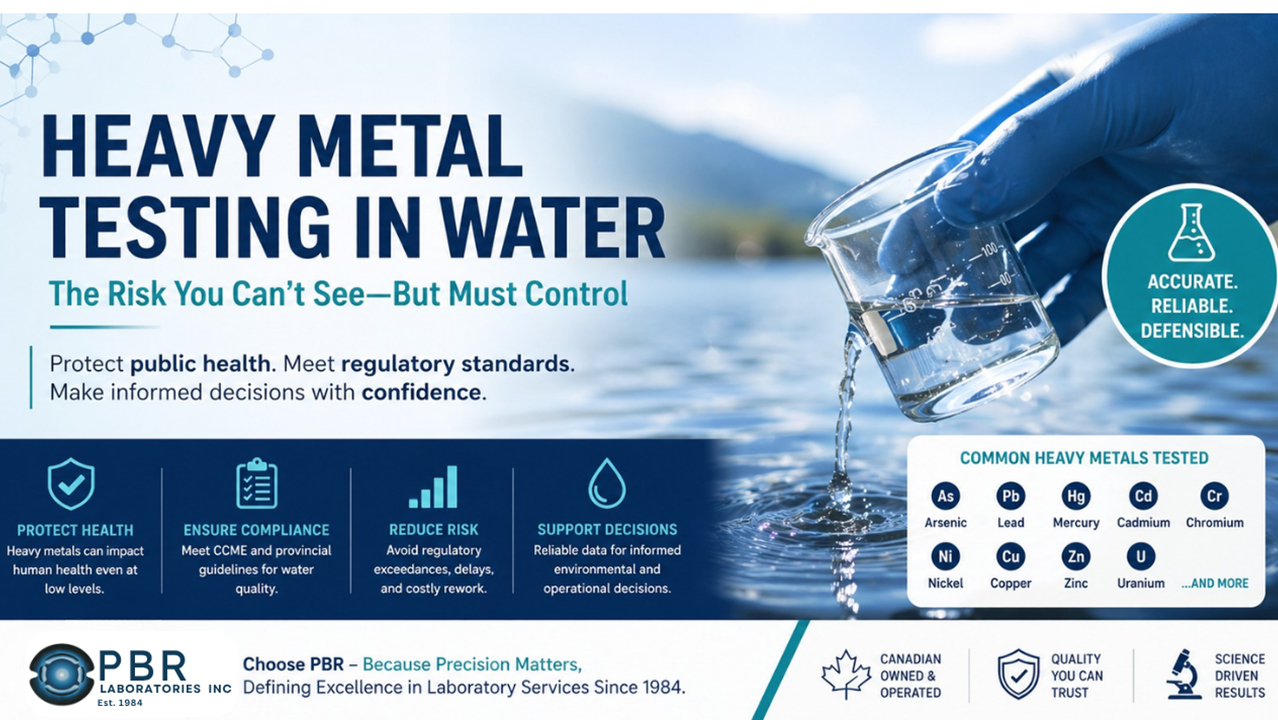
Heavy metals in water are not always visible—but the consequences of missing them are.
From municipal drinking water systems to industrial discharge and environmental monitoring, heavy metal contamination is a critical compliance and public health risk. Without proper testing, contaminants like lead, arsenic, and mercury can go undetected until they trigger regulatory action or operational disruption.
Heavy metals pose risks even at low concentrations. Depending on the source and exposure, they can:
In Alberta and across Canada, water quality is governed by provincial guidelines and frameworks such as CCME, making testing essential for demonstrating compliance.
Heavy metals can enter water systems through:
Standard environmental testing packages often align with CCME or Alberta Tier 1 metals, covering a broad range of elements relevant to water quality and compliance.
Heavy metal testing programs are designed based on your water matrix and regulatory requirements.
Common analytes include:
Standard environmental testing packages often align with CCME or Alberta Tier 1 metals, covering a broad range of elements relevant to water quality and compliance.
One of the most important (and often misunderstood) aspects of testing is choosing between:
Why this matters:
Proper sample handling—such as filtration—is also required depending on the test.
Heavy metal testing is essential for:
If water interacts with people, infrastructure, or the environment—testing is a critical control point.
We frequently see issues that lead to compliance gaps:
These mistakes can result in delays, rework, and increased costs.
A strong heavy metal testing program should include:
This ensures results are not just data—but usable for compliance and operational decisions.
Water systems in Alberta present unique challenges:
Testing programs should reflect local conditions and regulatory expectations to ensure accurate and defensible results.
Frequency depends on regulatory requirements, risk level, and application (e.g., routine monitoring vs project-based testing).
What method is used for heavy metal testing?Multi-element techniques such as ICP-based analysis are commonly used to detect metals at low concentrations.
Do I need both dissolved and total metals?In many cases, yes—especially for environmental compliance and discharge monitoring.
What is required for sample submission?We work with municipalities, consultants, and industry across Alberta to support water quality, compliance, and operational decisions.
We work with municipalities, consultants, and industry across Alberta to support water quality, compliance, and operational decisions.
If you’re managing water quality or environmental compliance:
Speak with PBR today to get clarity on what to test, how to test, and how to interpret your results.

What’s New in Canada’s Food Industry?
2026-03-09



The Science Behind Shelf-Life Testing
2024-11-05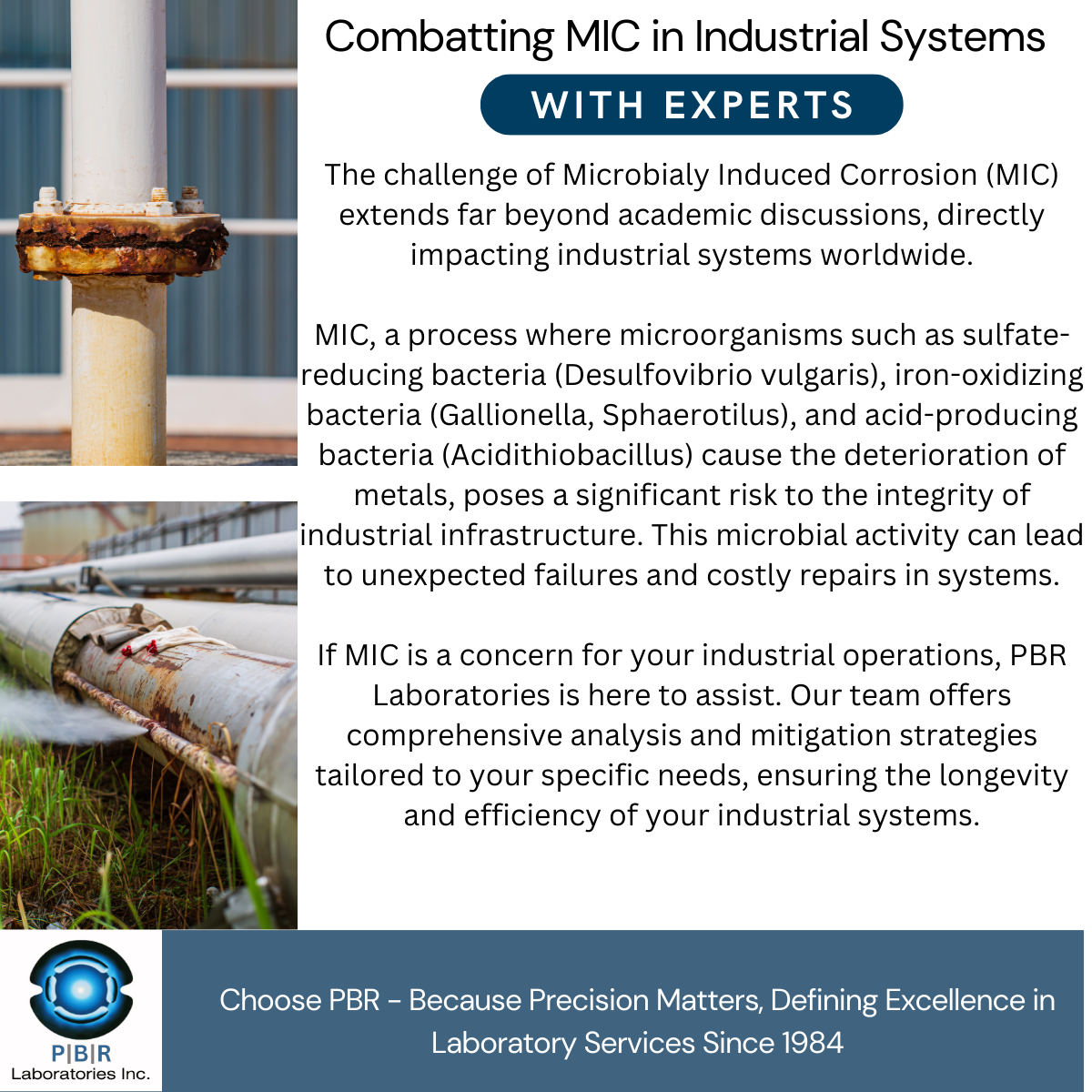
Combatting MIC in Industrial Systems
2024-09-17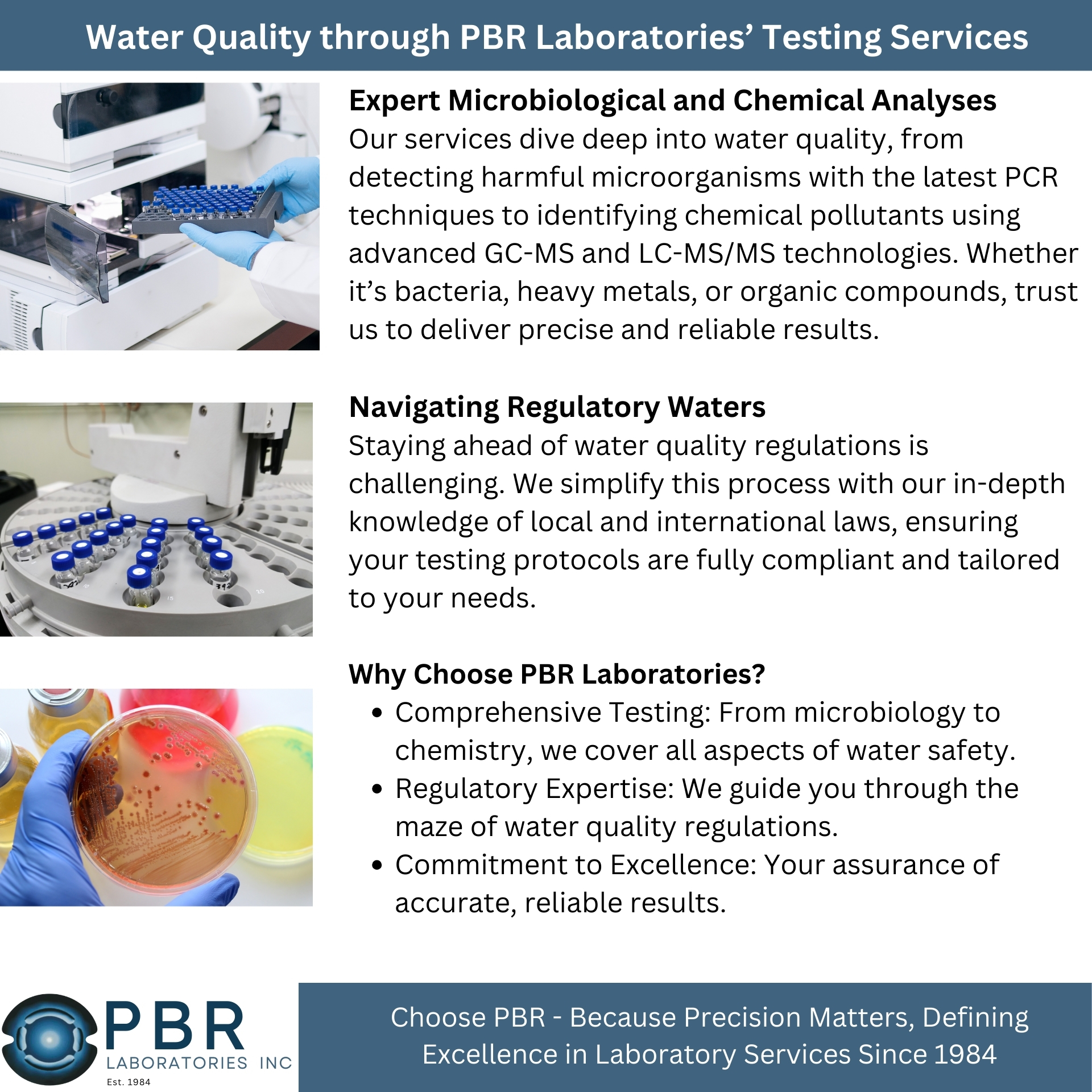
Water Quality Testing by PBR Laboratories
2024-09-17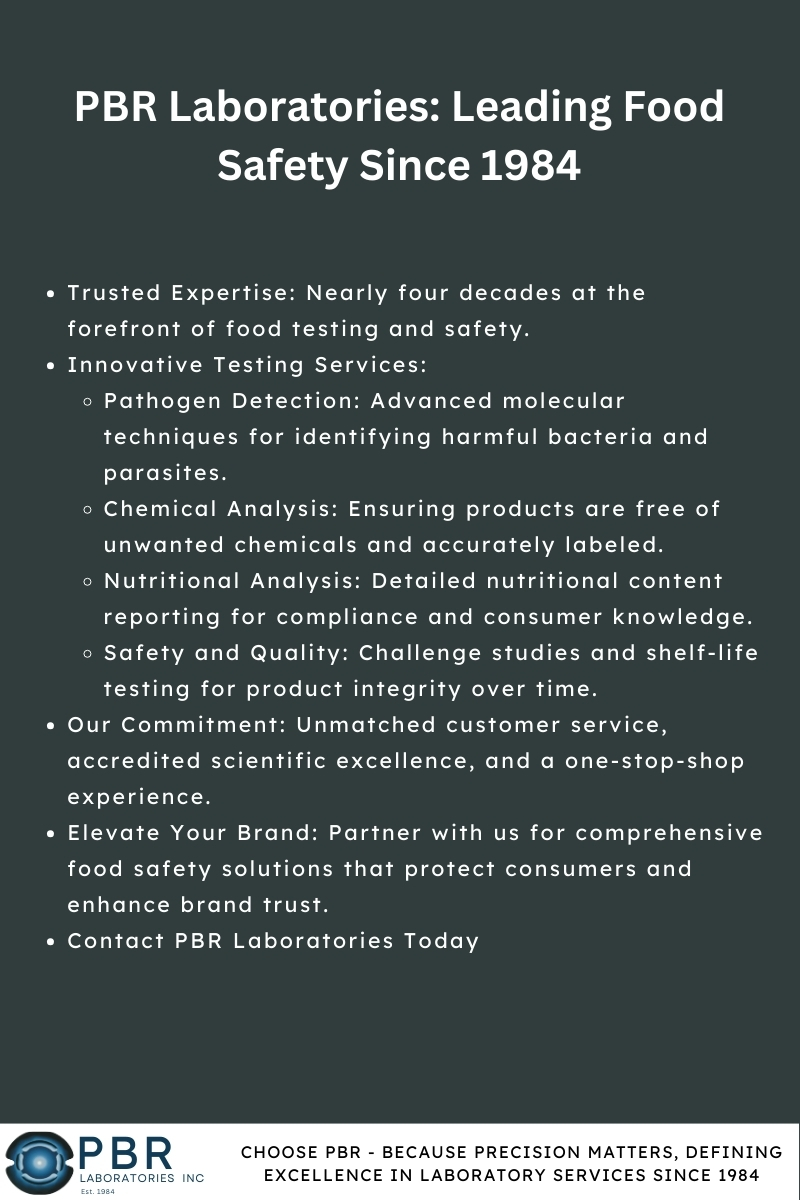
Leading Food Safety Since 1984
2024-09-17