


Phone No.
(780) 450-3957
Seafood products present unique food safety, quality, and shelf-life challenges due to their composition, processing requirements, storage conditions, and distribution environments.
Manufacturers, processors, importers, and distributors require testing programs that support product quality, food safety verification, shelf-life objectives, and customer requirements.
PBR Laboratories provides food microbiology testing, food pathogen testing, environmental monitoring, shelf-life studies, and nutritional analysis services for seafood processors throughout Alberta, Western Canada, and Canada.
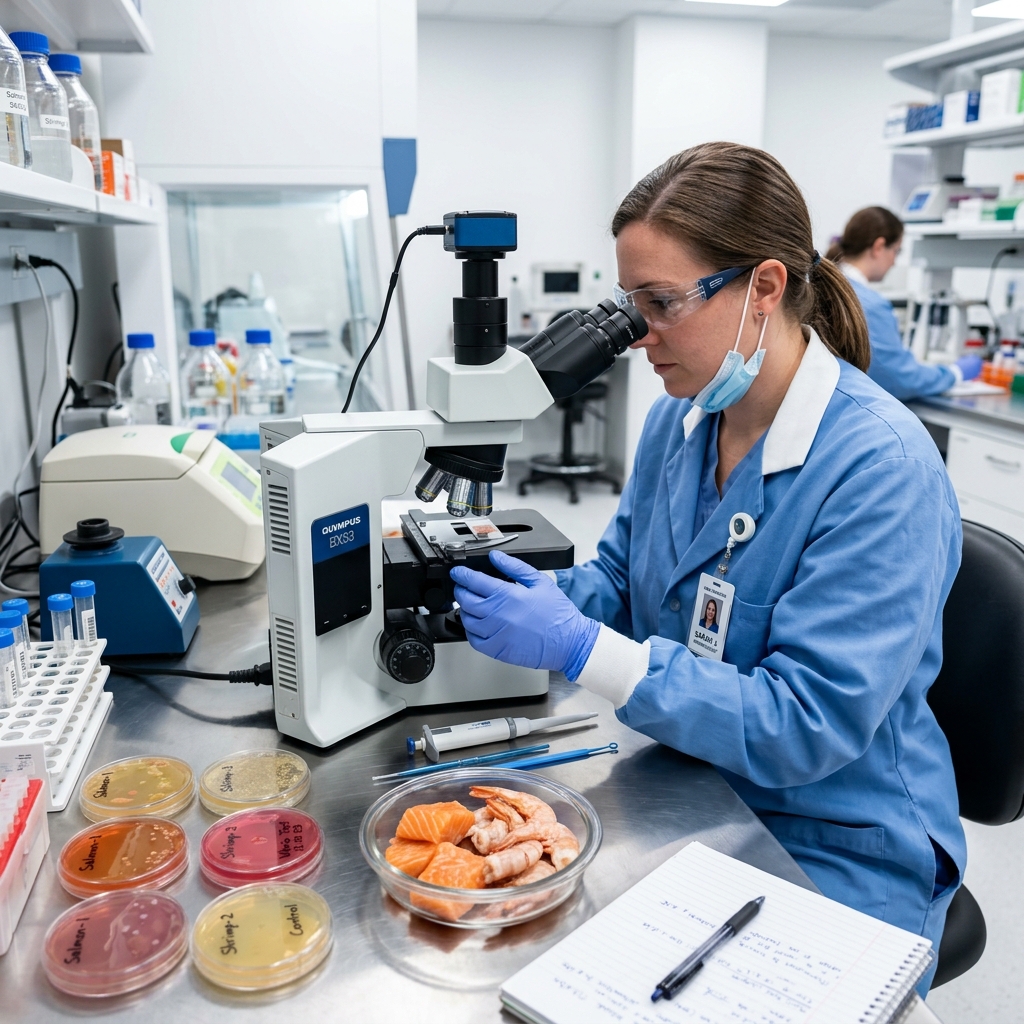
Whether producing:
Seafood products often face challenges related to:
Testing helps manufacturers verify controls and identify risks before products reach the marketplace.
Pathogen testing may be incorporated into seafood food safety programs depending on product type and risk profile.
Common testing may include:
Particularly important for ready-to-eat seafood products and processing environments.
Frequently included in environmental monitoring programs.
May be included in supplier verification and food safety programs.
May be evaluated where product type and risk assessments support testing.
May be included as part of broader verification programs.
Routine microbiology testing helps evaluate product quality and manufacturing consistency.
Common testing includes:
Provides information regarding overall microbial populations.
Supports sanitation and hygiene evaluations.
Provides additional process control information.
Evaluates environmental hygiene and sanitation effectiveness.
Supports shelf-life and product stability evaluations.
Environmental monitoring programs help seafood processors identify contamination risks before products become affected.
Shelf-life studies help evaluate:
Testing may include:
Nutritional analysis may support:
Common parameters may include:
When elevated microbiology or pathogen results occur:
Testing should support informed decisions and continuous improvement initiatives.
Common testing includes Aerobic Plate Count (APC), Total Coliforms, Escherichia coli (E. coli), Enterobacteriaceae, and Yeast & Mold.
Listeria monocytogenes can be a concern in ready-to-eat seafood products and processing environments, making environmental monitoring an important verification activity.
Shelf-life studies help evaluate product stability, microbiological changes, packaging performance, and best before dates.
Yes. Nutritional analysis supports label development, quality assurance programs, and product verification.
Review production records, environmental monitoring data, historical trends, and conduct root cause investigations to support corrective actions.
PBR Laboratories provides food microbiology testing, food pathogen testing, environmental monitoring, shelf-life studies, and nutritional analysis services for seafood processors, importers, and distributors throughout Alberta, Western Canada, and Canada.
Contact PBR to discuss seafood testing requirements, food safety objectives, environmental monitoring programs, shelf-life validation, and quality assurance needs.