

Skip to Main Content

Soil testing provides analytical information that can help environmental consultants, industrial facilities, landowners, agricultural operations and project teams evaluate soil chemistry, contamination, nutrients, microbiological activity and other site-specific conditions.

PBR Laboratories provides soil testing support from Edmonton for projects throughout Alberta, Western Canada and Canada. Depending on the site, material and decision being made, testing may include:

  • soil chemistry;
  • pH and electrical conductivity;
  • nutrients;
  • salinity and sodicity indicators;
  • metals;
  • petroleum hydrocarbons;
  • glycols and alcohols;
  • environmental microbiology;
  • selected agricultural soil parameters.

The appropriate testing program depends on the site history, soil matrix, suspected contaminants, sampling plan and decision the results need to support.

What Is Soil Testing?

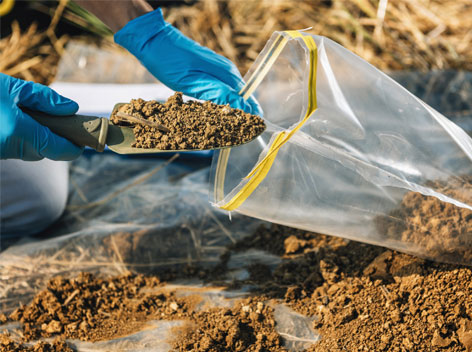
Soil testing measures selected chemical, microbiological or compositional characteristics of a submitted soil sample.

Testing may support questions such as:

  • Is there evidence of environmental contamination?
  • Which contaminants should be investigated at a site?
  • Are petroleum hydrocarbons or metals elevated?
  • What are the soil's pH, salinity or nutrient characteristics?
  • Could microbiological activity be relevant to a remediation investigation?
  • Does additional sampling need to be completed?
  • How should an unexpected soil result be investigated?

A laboratory result applies to the submitted sample. How confidently it represents a larger site depends on where, how and why the sample was collected. PBR’s decision framework specifically identifies representative sampling as critical when laboratory results support site or lot-level decisions.

Environmental & Agricultural Soil Testing

Environmental Soil Testing

Environmental soil testing can support:

  • contaminated-site investigations;
  • baseline characterization;
  • industrial-site assessment;
  • environmental monitoring;
  • remediation;
  • reclamation;
  • land-development decisions;
  • investigation of suspected releases.

Testing may involve soil chemistry, petroleum hydrocarbons, metals and environmental microbiology depending on the project.

Agricultural Soil Testing

Agricultural soil testing can provide analytical information about:

  • soil pH;
  • electrical conductivity;
  • nutrients;
  • salinity and sodicity;
  • total organic carbon;
  • cation exchange capacity;
  • major ions.

These results can support soil characterization and agricultural management decisions. PBR should not imply that it provides agronomic fertilizer recommendations unless that service is separately verified.

Soil Testing Services

Soil Chemistry Testing

Soil chemistry testing characterizes chemical conditions in a submitted soil sample.

PBR's documented soil capabilities include parameters such as:

  • pH;
  • alkalinity;
  • electrical conductivity;
  • major anions and cations;
  • total organic carbon;
  • sodium adsorption ratio;
  • total potassium;
  • total nitrogen;
  • total phosphorus;
  • total sulfur;
  • cation exchange capacity;
  • petroleum hydrocarbon-related parameters;
  • selected industrial contaminants;
  • metals.

These parameters can support environmental, agricultural, industrial and reclamation decisions.

What decisions can soil chemistry results support?

Results may help characterize:

soil condition → salinity/sodicity → nutrient status → contaminant investigation → remediation or management decisions

Explore Soil Chemistry Testing →

Environmental Soil Contamination Testing

Environmental soil contamination testing evaluates soil for parameters relevant to suspected or known site impacts.

Potential testing areas can include:

  • petroleum hydrocarbons;
  • metals;
  • industrial contaminants;
  • soil chemistry;
  • selected microbiological parameters.

When is environmental soil testing useful?

Testing may support:

  • site assessment;
  • investigation of a spill or release;
  • characterization of impacted areas;
  • remediation planning;
  • reclamation;
  • follow-up monitoring.

The required analytical program should be based on the site's history and the decision the results need to support.
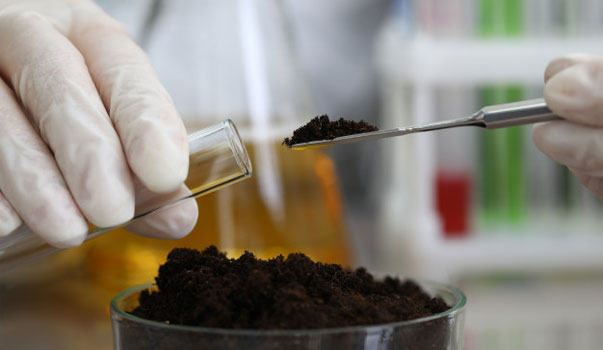
Explore Environmental Soil Contamination Testing →

Soil Microbiology Testing

Microbiological testing can provide information about microbial populations relevant to environmental systems and selected remediation investigations.

PBR's existing environmental microbiology capability includes areas such as:

  • heterotrophic aerobic bacteria;
  • iron-related bacteria;
  • sulfate-reducing bacteria;
  • nitrifying bacteria;
  • denitrifying bacteria;
  • acid-producing bacteria;
  • slime-forming organisms;
  • hydrocarbon-utilizing bacteria;
  • other environmental microbial groups where applicable.

PBR's documented service catalogue also includes several bacterial activity response tests for water and soil matrices.

What can soil microbiology help investigate?

Depending on the project, microbiological testing may contribute to questions involving:

  • biodegradation;
  • bioremediation potential;
  • hydrocarbon investigations;
  • microbial activity;
  • site conditions affecting remediation.

Explore Soil Microbiology Testing →

Petroleum Hydrocarbon Testing in Soil

Petroleum hydrocarbon testing can support investigations involving fuel, oil or other hydrocarbon impacts to soil.

PBR's current soil service information identifies petroleum hydrocarbon testing among its soil chemistry capabilities.

Testing may support:

  • suspected release investigations;
  • contaminated-site characterization;
  • industrial-site assessment;
  • remediation planning;
  • follow-up monitoring.

What does an elevated hydrocarbon result mean?

An elevated result indicates the concentration measured in the submitted sample and must be interpreted against the applicable project criteria, site context and sampling location.

It does not by itself establish the full extent of contamination.

Additional sampling may be needed to determine:

  • horizontal extent;
  • vertical extent;
  • potential source;
  • whether groundwater or other environmental media may also be affected.

Explore Petroleum Hydrocarbon Testing in Soil →

Metals Testing in Soil

Metals testing can support environmental investigations, baseline characterization and selected agricultural or industrial applications.

Depending on the project and method, metals may be evaluated to help answer:

  • Is a particular element elevated at this location?
  • Does the result differ from expected background conditions?
  • Is additional site characterization needed?
  • Could an industrial or historical site activity have contributed?

Does detecting a metal mean soil is contaminated?

Not automatically.

A measured concentration needs to be interpreted in the context of:

  • site history;
  • applicable criteria;
  • land use;
  • background concentrations;
  • sample location;
  • project objective.

Explore Metals Testing in Soil →

Agricultural Soil & Nutrient Testing

Agricultural soil testing can provide analytical information about soil conditions relevant to crop, land and nutrient-management decisions.

PBR's documented soil chemistry capabilities include:

  • pH;
  • electrical conductivity;
  • total nitrogen;
  • total phosphorus;
  • total potassium;
  • total sulfur;
  • sodium adsorption ratio;
  • cation exchange capacity;
  • total organic carbon;
  • major ions.

What can these results help determine?

Testing can support evaluation of:

  • soil acidity or alkalinity;
  • salinity;
  • sodicity;
  • nutrient characteristics;
  • organic carbon;
  • soil chemical condition.

Laboratory data should be interpreted alongside the intended agricultural or land-use decision.

Explore Agricultural Soil & Nutrient Testing →

Soil pH, Electrical Conductivity, SAR & Salinity

These parameters deserve a dedicated authority section because they answer different questions.

Soil pH

pH indicates whether the submitted soil is acidic, neutral or alkaline under the applicable method. It can influence chemical behaviour and nutrient availability.

Electrical Conductivity

Electrical conductivity provides information related to the soluble ionic content of the soil extract and is commonly used in evaluating salinity-related conditions.

Sodium Adsorption Ratio

Sodium adsorption ratio provides information related to the relative amount of sodium compared with calcium and magnesium. It can be useful in evaluating sodicity-related concerns.

Are salinity and sodicity the same?

No.

They are related but distinct soil conditions and may require different analytical parameters for interpretation.

Related Resource: Soil pH, Electrical Conductivity, SAR & Salinity Explained →

Soil Nutrient Testing

PBR's documented soil chemistry capabilities include total:

  • nitrogen;
  • phosphorus;
  • potassium;
  • sulfur.

These measurements can contribute to soil characterization and agricultural or environmental evaluations.

What does a nutrient result mean?

The result describes the amount measured in the submitted sample under the applicable analytical method.

Interpretation depends on:

  • soil type;
  • project objective;
  • land use;
  • sampling depth;
  • season;
  • agricultural or environmental context.

Related Resource: Understanding Soil Nutrient Test Results →

When Should Soil Be Tested?

  • Before or During Environmental Site Investigation
    Where site history suggests possible contamination.
  • After a Spill or Release
    Where fuel, industrial chemicals or other materials may have affected soil.
  • Before or During Remediation
    To characterize contamination and support remediation decisions.
  • During Reclamation
    To evaluate selected soil characteristics as part of reclamation or recovery programs.
  • During Land Development
    Where historical site use creates environmental soil concerns.
  • For Agricultural Soil Characterization
    Where pH, nutrients, salinity or other soil characteristics need to be measured.
  • After an Unexpected Previous Result
    Where additional sampling or testing is needed to understand whether the result represents a localized or broader issue.

What Does an Elevated Soil Result Mean?

An elevated soil result means the laboratory measured a concentration or value above the reference or criterion being used for that project.

It does not automatically identify:

  • the contamination source;
  • the size of the affected area;
  • the depth of impact;
  • whether groundwater is affected;
  • whether remediation is required.

Those questions may require additional investigation and sampling.

The next step should be based on:

result → site history → sample location → applicable criteria → investigation objective

Related Resource: What to Do After an Elevated Soil Test Result →

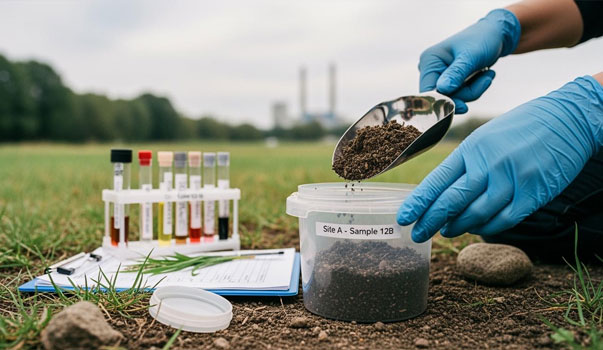
Soil Sampling Matters

One laboratory sample represents one specific portion of a site.

For environmental investigations, sampling design can determine whether the results are useful for understanding the broader site.

Common sampling problems include:

  • collecting too few samples;
  • sampling only convenient locations;
  • ignoring soil depth;
  • combining unrelated areas;
  • cross-contamination during sampling;
  • incorrect sample containers;
  • incomplete sample identification;
  • failing to account for suspected contaminant distribution.

PBR's decision framework emphasizes representative sampling, proper containers, preservation, matrix suitability and the intended decision as critical workflow considerations.

Ask PBR about sample requirements before collecting environmental soil samples.

Environmental Soil Testing & Groundwater

Soil contamination does not always remain confined to soil.

Depending on the contaminant, site conditions and project objective, an investigation may also need to consider:

  • groundwater;
  • surface water;
  • wastewater;
  • other environmental media.

PBR's Environmental Water services provide a natural cross-link for projects where soil and water results need to be considered together.

Related Service: Environmental Water Testing →

Industry & Application Areas

Soil Testing for Environmental Consultants

Environmental consultants may use soil laboratory results to support:

  • baseline investigations;
  • contaminated-site assessment;
  • source characterization;
  • remediation planning;
  • reclamation;
  • monitoring programs.

The most useful testing program begins by defining:

  • What happened at the site?
  • Which contaminants are plausible?
  • Where should samples be collected?
  • What criteria will be used to interpret results?
  • What decision follows from the data?

Explore Soil Testing for Environmental Consultants & Site Assessment →

Soil Testing for Oil, Gas & Industrial Sites

Industrial and energy sites may require soil testing where operations, historical activities or releases create potential environmental concerns.

Relevant analyses may include:

  • petroleum hydrocarbons;
  • metals;
  • glycols and related industrial contaminants where applicable;
  • soil chemistry;
  • microbiological testing;
  • related groundwater testing.

Explore Industrial Soil Testing →

Soil Testing for Land Development & Construction

Environmental soil testing can help investigate historical land use and possible contamination before or during development.

PBR's analytical soil services are focused on environmental and chemical testing. They should not be represented as geotechnical engineering services unless those capabilities are separately verified.

Potential environmental testing may include:

  • hydrocarbons;
  • metals;
  • soil chemistry;
  • other site-history-driven parameters.

Explore Environmental Soil Testing for Land Development →

Soil Testing for Remediation & Reclamation

Soil testing can support different stages of a remediation or reclamation project.

A typical analytical workflow may include:

Initial characterization → Identify contaminants → Evaluate distribution → Remediation or reclamation activity → Follow-up sampling → Review analytical results

Relevant testing may include soil chemistry, hydrocarbons, metals and environmental microbiology depending on the project.

Explore Remediation & Reclamation Soil Testing →

Location & Service Areas

Soil Testing in Edmonton & Alberta

PBR Laboratories provides soil testing support from Edmonton for environmental consultants, industrial facilities, land-development projects, agricultural clients and other organizations throughout Alberta.

Testing can be selected around:

  • environmental site history;
  • suspected contaminants;
  • agricultural objectives;
  • sample location and depth;
  • applicable specifications or criteria;
  • project decisions.

Looking for soil testing in Alberta? Speak with PBR about the site, sample matrix and analytical objective.

Soil Testing Across Western Canada

PBR supports soil testing projects throughout Western Canada where environmental, agricultural or industrial decisions require analytical soil data.

Clients can contact PBR to discuss:

  • sample requirements;
  • appropriate analytical parameters;
  • environmental soil matrices;
  • hydrocarbon or metals investigations;
  • agricultural soil chemistry;
  • microbiology where applicable.

Soil Testing Across Canada

PBR provides analytical support for soil-testing projects across Canada.

The appropriate testing program should be designed around:

site or land-use objective → sampling plan → analytical parameters → laboratory result → project decision

This reflects PBR's core positioning as a laboratory that helps clients understand results and make informed decisions rather than simply receive analytical data.

Frequently Asked Questions

What soil testing does PBR provide?

PBR supports soil chemistry, environmental contamination testing, selected petroleum hydrocarbon and metals testing, environmental microbiology, agricultural soil chemistry and nutrient-related analysis for applicable soil matrices. Specific methods and sample requirements should be confirmed for the project.

Does PBR test contaminated soil?

Yes. PBR supports environmental soil testing where chemical, hydrocarbon, metals or other contamination concerns need to be investigated.

Can PBR test soil for petroleum hydrocarbons?

PBR's soil service information includes petroleum hydrocarbon testing among its soil chemistry capabilities. The appropriate analysis should be selected according to the suspected contaminant and project requirement.

Can PBR test soil for heavy metals?

PBR provides metals testing for applicable soil matrices. The required metal list and analytical method should be confirmed against the project objectives.

Does PBR perform soil microbiology testing?

Yes. PBR's documented environmental microbiology capabilities include several bacterial groups relevant to environmental and soil investigations, depending on the matrix and objective.

Can PBR test agricultural soil?

Yes. PBR's documented soil chemistry capabilities include pH, electrical conductivity, nutrient-related parameters, sodium adsorption ratio, cation exchange capacity, total organic carbon and major ions.

What is the difference between soil salinity and sodicity?

Salinity generally relates to soluble salts, while sodicity relates to the relative amount of sodium in the soil system. Electrical conductivity and sodium adsorption ratio provide different information and should not be treated as interchangeable.

How many soil samples should I collect?

The number and location of samples depend on the site size, soil variability, suspected contamination, sampling depth and decision the results will support. Representative sampling is critical.

Does PBR provide geotechnical soil testing?

The verified PBR material used for this page supports environmental, chemical and microbiological soil testing. It does not establish broad geotechnical engineering services such as bearing-capacity or Atterberg-limit testing.

Does PBR provide soil testing outside Alberta?

Yes. PBR is based in Edmonton and supports clients throughout Alberta, Western Canada and Canada.

Need Soil Testing for an Environmental, Industrial or Agricultural Project?

Tell PBR:

  • What is the site or application?
  • What type of soil is being tested?
  • What contaminants or parameters are of concern?
  • Where and how will samples be collected?
  • What criteria or specification applies?
  • What decision will the results support?

PBR can discuss available soil testing, matrix considerations and sample requirements before submission.

Choose PBR — Because Precision Matters, Defining Excellence in Laboratory Services Since 1984.