


Phone No.
(780) 450-3957
Food ingredients form the foundation of finished food products.
Whether supplying ingredients to food manufacturers, processors, co-packers, or retailers, ingredient quality and consistency can significantly influence food safety, shelf life, nutritional performance, and product quality.
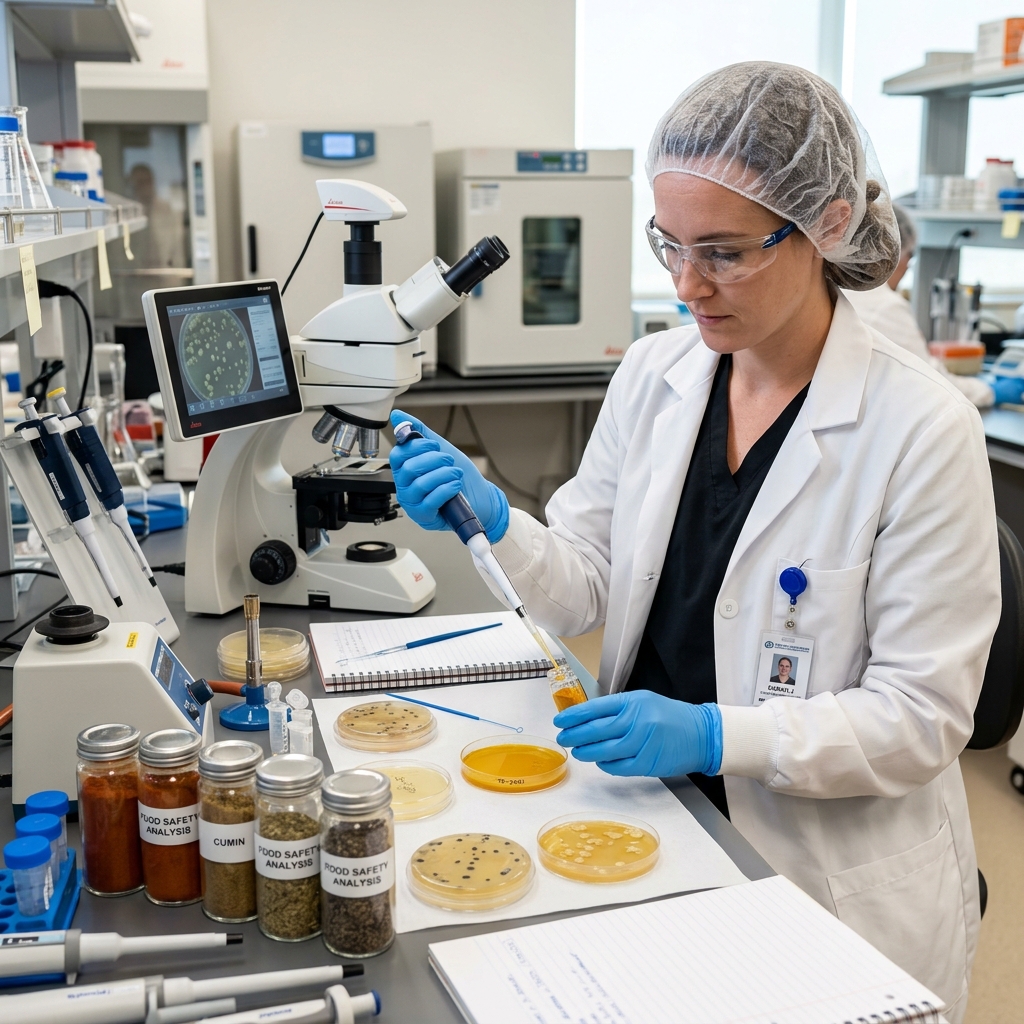
PBR Laboratories provides food microbiology testing, food pathogen testing, nutritional analysis, allergen testing, ingredient analysis, and shelf-life studies for ingredient manufacturers and suppliers throughout Alberta, Western Canada, and Canada.
Whether producing:
Food manufacturers increasingly require ingredient verification data. Testing helps answer critical questions:
Testing supports both supplier confidence and manufacturing performance.
Microbiology testing helps evaluate ingredient quality and consistency.
Common testing includes:
Evaluates overall microbial populations.
Supports hygiene and quality evaluations.
Provides additional hygiene indicators.
Used to evaluate environmental hygiene and process controls.
Particularly important for dry ingredients and shelf-stable products.
Food pathogen testing may be incorporated into supplier verification and food safety programs.
Common testing includes:
Frequently requested for spices, dry ingredients, and food ingredients.
May be included based on ingredient type and intended use.
Included where ingredient risk assessments support testing.
May be evaluated alongside Escherichia coli (E. coli) O157:H7.
Nutritional analysis helps verify ingredient specifications and support formulation activities.
Allergen testing may be used to support:
Ingredient suppliers often require allergen verification as part of broader quality programs.
Ingredient stability is often influenced by:
Critical parameters for ensuring physical and biological stability during storage.
Shelf-life studies help evaluate:
Shelf-life studies are particularly useful for ingredients with extended storage periods.
When ingredient testing identifies an issue:
Testing should support informed corrective action and continuous improvement.
Food microbiology testing, food pathogen testing, nutritional analysis, allergen testing, moisture content analysis, water activity (aw) testing, and shelf-life studies.
Certain ingredients, particularly dry ingredients and spices, may be included in supplier verification and food safety testing programs.
Nutritional analysis helps verify specifications and supports formulation and labeling activities.
Allergen testing helps support risk management programs, supplier verification, and customer requirements.
Yes. Shelf-life studies help evaluate ingredient stability and storage performance.
PBR Laboratories provides food microbiology testing, food pathogen testing, nutritional analysis, allergen testing, moisture content analysis, water activity (aw) testing, and shelf-life studies for ingredient manufacturers and suppliers throughout Alberta, Western Canada, and Canada.
Contact PBR to discuss supplier verification testing, ingredient quality programs, nutritional analysis, allergen management, and food safety objectives.